April 29, 2026 · By Ben
CBD oil for dogs: what changes when the customer is canine
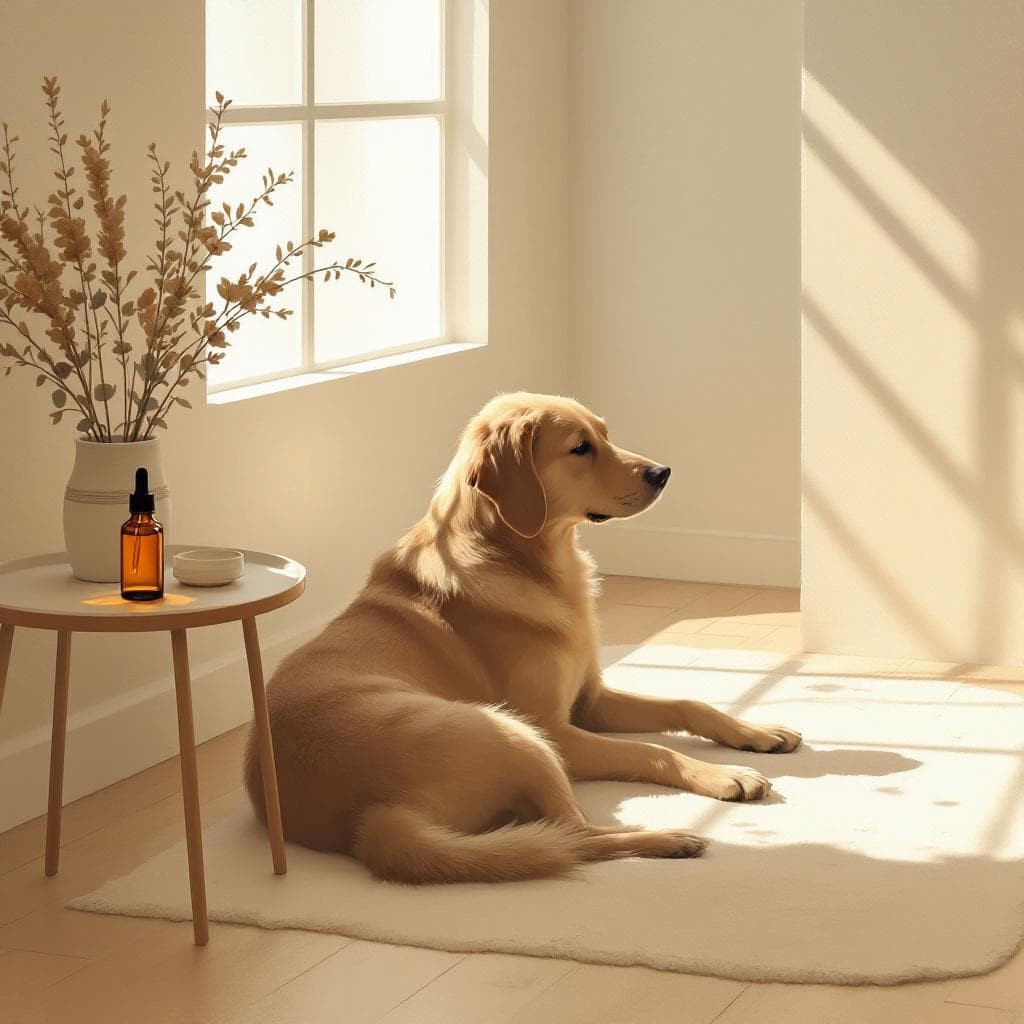
Two things change when a CBD product is formulated for a dog rather than for an adult human: the dose math (because the dose is calculated by body weight, and a dog’s body weight ranges across a much wider span than an adult’s), and the formulation (because some carrier oils, terpenes, and additives that are unremarkable for humans are not appropriate for dogs). The legal framework — the Cannabis Act and the Health of Animals Regulations — does not change.
This article explains how the Honest Botanicals dog-formulated tinctures are dosed, what to look for on the label, and what the Certificate of Analysis (COA) tells you that the label does not. We do not give veterinary advice. The decision to give a dog any cannabinoid-containing product belongs to the dog’s owner in consultation with the dog’s veterinarian. We publish the dose math, the COA, and the producer information so that conversation has the documentation it needs.
Why dose-by-weight matters
An adult human dose for a CBD product is typically a fixed range — for example, 10–25 mg as a starting point — regardless of whether the adult weighs 50 kg or 100 kg. The weight range is narrow enough that fixed doses work for most purposes.
A dog is different. A Yorkshire Terrier weighs 2–3 kg. A Labrador Retriever weighs 30 kg. A Great Dane weighs 60–80 kg. The same fixed dose of CBD that is appropriate for one is inappropriate for the others by an order of magnitude. Dog tinctures are therefore labelled and dosed in milligrams of CBD per kilogram of body weight, and the label translates that into per-mL or per-dropper amounts.
The published veterinary pharmacokinetic literature on CBD in dogs (Gamble et al. 2018, Bartner et al. 2018, McGrath et al. 2019, and subsequent work) reports CBD doses ranging from approximately 0.5 mg/kg to 5 mg/kg in research settings, depending on the study design and the question being investigated. Translating that to a 30 kg Labrador is 15–150 mg of CBD per dose, which is a wide range. The veterinarian deciding the dose will narrow it based on the specific dog and the specific reason for use. Honest Botanicals publishes the math; the dose decision is between the dog’s owner and the dog’s vet.
How a dog tincture is labelled
A dog-formulated tincture should state, on the label or product page:
- Total CBD per bottle in milligrams.
- Bottle volume in millilitres.
- CBD per mL (or per dropper, if the dropper is calibrated to a fraction of a millilitre).
- A weight-based dosing reference (e.g., a chart or formula relating mg CBD to kg body weight).
- The carrier oil (typically MCT for canine formulations).
- Any flavouring agents, with their source.
- The producer’s federal licence number.
Honest Botanicals dog tinctures: Full Spectrum CBD Oil for Dogs — Chicken Flavoured, CBD Oil for Dogs — Unflavoured, and the HB-PET-ISO isolate (the only product in the pet category formulated for cats as well, because isolate has no minor-cannabinoid content that is metabolised differently in feline livers).
What changes in formulation
A dog formulation differs from the adult human formulation in three places that show up on the COA and the ingredient list:
Carrier oil. MCT is well-tolerated by dogs and is the standard carrier in veterinary CBD formulations. Some human CBD tinctures use hemp seed oil or olive oil as the carrier; these are also generally safe for dogs but produce different absorption pharmacokinetics, and the manufacturer should be explicit about the carrier on the label.
Terpenes. A full-spectrum extract retains the terpene profile of the source plant. Some terpenes are unremarkable for humans but are species-relevant for dogs at high concentrations; pinene and limonene are the most-studied examples. Dog-formulated full-spectrum tinctures should report terpene content on the COA, and the COA should be available for the lot you receive.
Flavouring. Adding chicken or another savoury flavour to a tincture makes it palatable for dogs that resist a plain MCT-and-cannabinoid taste. Honest Botanicals’ chicken flavour is sourced from a flavouring agent disclosed on the ingredient list. Dogs with poultry sensitivities should use the unflavoured tincture instead.
Dogs first; cats are a separate question
Most consumer “pet CBD” categories are framed broadly, but cats and dogs metabolise cannabinoids differently. The published feline CBD pharmacokinetic literature is much smaller than the canine literature, and several minor cannabinoids and terpenes that are well-tolerated in dogs are metabolised at different rates in cats. Honest Botanicals’ pet category is dogs-first for that reason: most of the catalogue is dog-formulated, and the only product appropriate for cats is the HB-PET-ISO isolate (isolate, by definition, has no minor-cannabinoid or terpene content). For any cat-specific question, consult a veterinarian familiar with the published feline cannabinoid literature.
What we do not say
We do not say what CBD does to a dog. The published veterinary literature investigates outcomes; we publish the COA, the producer, and the dose math. Outcome claims for veterinary CBD products are restricted under both the Cannabis Act, section 17, and the Health of Animals Regulations. The decision and the conversation belong to the dog’s owner and the dog’s veterinarian.
Questions about a specific dog tincture? The COA on the product page lists the cannabinoid profile, terpene profile, and contaminant test results. The product description lists the carrier oil and any flavouring. If your vet has a question we have not answered, email us at hello@honestbotanicals.co with the product’s lot number.