April 29, 2026 · By Ben
Tincture, capsule, topical: how the format affects the dose math
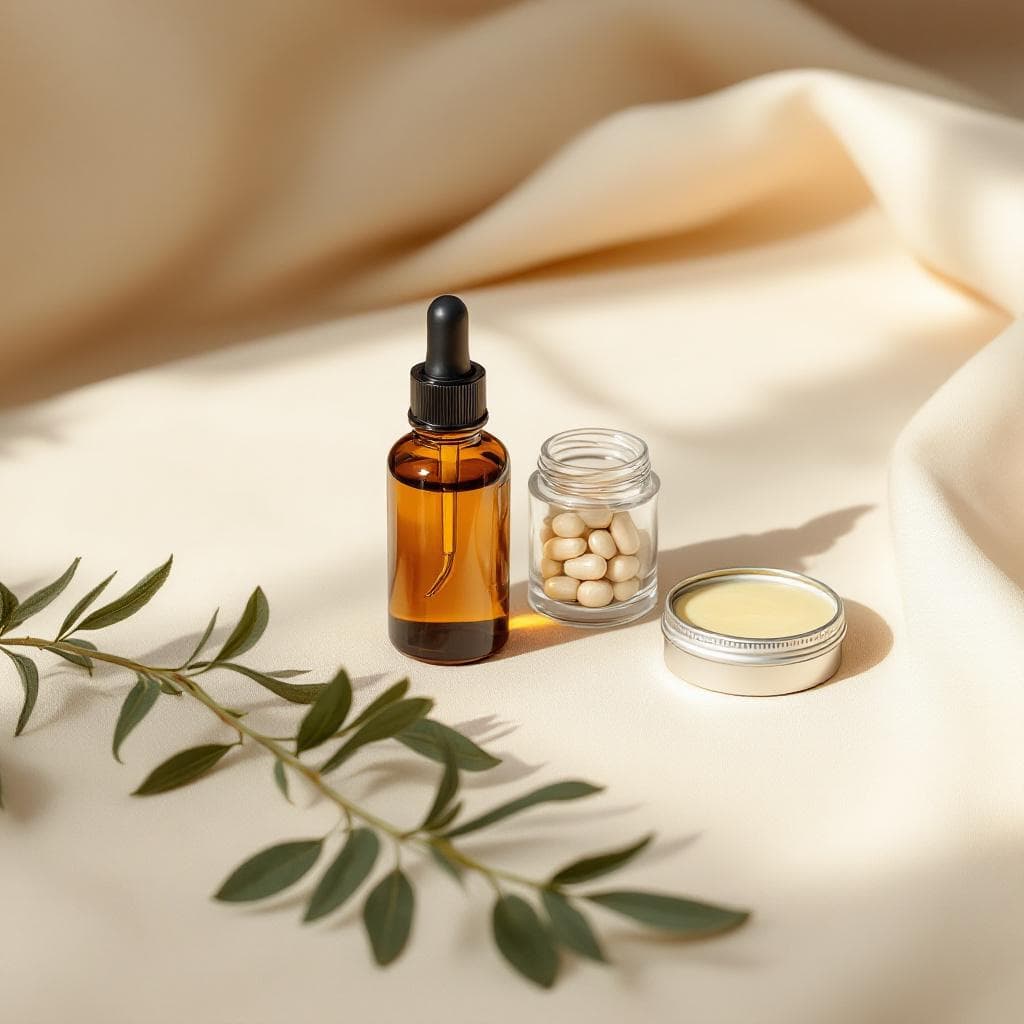
The Honest Botanicals catalogue is organized by format: oils (tinctures), capsules, and topicals. The format affects two things that matter when you read a label: how the product is measured into a dose, and how that dose is absorbed. This article explains the measurement math for each format, what to look for on the label, and what a Certificate of Analysis tells you that a label cannot. We do not say which format is best — that depends on use case, what your physician has advised, and the dose math below.
Tincture (CBD oil)
A tincture is CBD extract suspended in a carrier oil — most commonly MCT (medium-chain triglyceride) oil, sometimes hemp seed oil or olive oil. It is sold in a dropper bottle. The dose is measured by volume — most droppers are calibrated to 1 mL.
The math: Total CBD ÷ Bottle volume = CBD per mL. A 1000 mg bottle in 30 mL contains ~33 mg CBD per mL. Half a dropper (0.5 mL) contains ~17 mg CBD. The dropper is the unit of measurement. The label should state both the total bottle content and the per-mL concentration.
What the label should show: Total CBD in mg per bottle, bottle volume in mL, CBD per mL (or per dropper), and a description of any other cannabinoids present (CBG, CBN, CBC) with their per-mL concentrations.
Tincture in the catalogue: Full Spectrum CBD Oil (1000 mg / 30 mL = ~33 mg/mL), Super Spectrum Multi-Cannabinoid Oil, CBD Oil — No THC, the 4:1 / 1:1 / 20:1 ratio tinctures.
Capsule
A capsule contains a pre-measured fixed dose of CBD per unit. Each capsule is the unit of measurement. There is no math at the bottle level — you take one capsule, that is one fixed dose.
The math: Total CBD ÷ Number of capsules = CBD per capsule. A 30-capsule bottle labelled 1500 mg total CBD is 50 mg per capsule. The label should state both the total bottle content and the per-capsule dose.
What the label should show: Total CBD per bottle, number of capsules, CBD per capsule, and any minor cannabinoid content per capsule. Capsules are typically isolate or distillate-based — meaning the cannabinoid content per capsule is exact rather than approximate.
Why someone chooses a capsule over a tincture: The dose is fixed, so there is no measurement error from a dropper. It is also tasteless, which matters for users who find the carrier-oil taste of a tincture unpalatable. Onset is slower than a tincture taken sublingually, because the capsule passes through the stomach before absorption.
Capsules in the catalogue: Full Spectrum CBD Gel Caps (50 mg per capsule, 30 capsules per bottle).
Topical
A topical is a CBD product applied to the skin — typically a balm, salve, or cream. It is measured by mass of total CBD in the container, but applied by volume (a fingertip, a pea-size amount, etc.) — which means the per-application dose is approximate.
The math: Total CBD ÷ Container mass (in grams) = CBD per gram of product. A 30 g balm labelled 600 mg total CBD is 20 mg per gram. A pea-sized application is roughly 0.2-0.5 g — so 4-10 mg of CBD per application, depending on how much you use.
Topical CBD is absorbed through the skin into local tissue. Published pharmacokinetic literature notes that topical CBD bioavailability is low compared with oral or sublingual administration — the molecule does not pass freely through the skin barrier into systemic circulation. This is why topicals are formulated for local application rather than as a delivery vehicle for systemic dosing.
What the label should show: Total CBD per container, container mass in grams, CBD per gram of product, and a list of inactive ingredients (carrier base, fragrance if any, preservatives).
Topicals in the catalogue: CBD Therapeutic Balm (full-spectrum, multiple strength options).
What the COA tells you that the label cannot
The label is descriptive. The Certificate of Analysis is evidence. Specifically:
- The COA reports the actual measured cannabinoid concentration in the lot, by HPLC. The label states the target concentration. For a well-controlled production process those numbers should match closely (within a few percent), but the COA is the source of truth for the lot you receive.
- The COA reports residual solvent, heavy metal, microbial, and pesticide tests. Those are not on the label. They are run by an ISO 17025-accredited laboratory and the result is “below LOD” for each contaminant tested.
- The COA names the lab and the lot. If you have a question about a particular bottle, the lot number on the bottle and the lot number on the COA should match.
Picking a format
This is a question of use case and personal preference, not of one format being universally better than another. Tinctures give you fine-grained control over dose. Capsules give you a fixed, tasteless dose. Topicals are formulated for skin application. We do not give medical advice on which to use. Your physician, the published scientific literature, and Health Canada’s monographs are the appropriate sources for those questions. Our role is to publish the dose math, the COA, and the producer information so you can match the product to your own decision.
Questions about a specific product? The COA on the product page answers most of them. The rest, email us at hello@honestbotanicals.co.